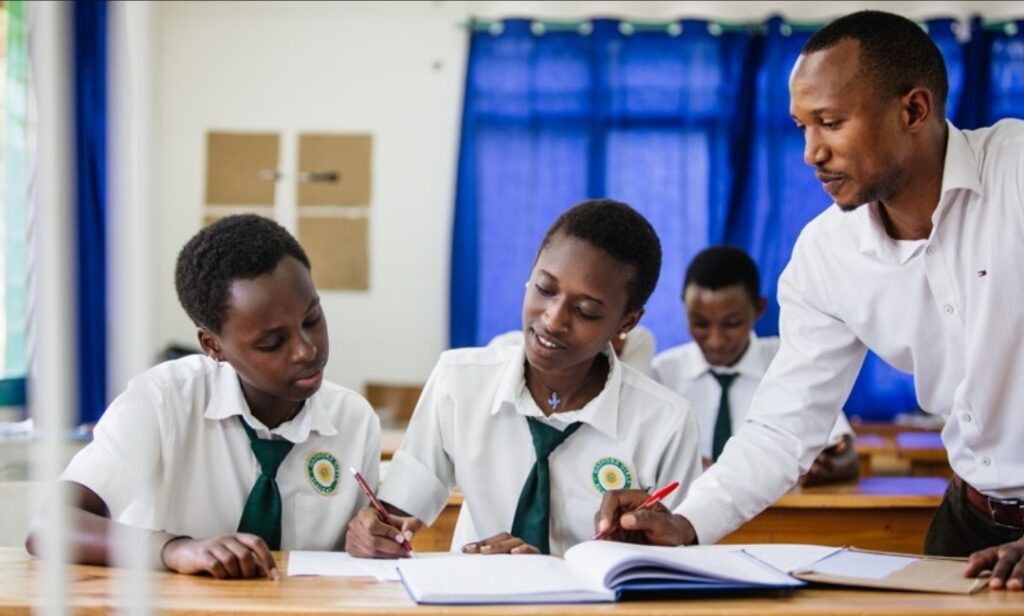
Rwanda, a small landlocked country in East Africa, has made significant strides in recent years in expanding access to higher education. The government has made it a priority to invest in education, and as a result, the country has seen an increase in the number of universities, vocational schools, and other educational institutions. This has led to a growing number of Rwandans receiving a high-quality education, which has in turn boosted economic growth and development.
One of the major steps the Rwandan government has taken to improve higher education in the country is the establishment of the Rwanda Education Board (REB) in 2010. The REB oversees the entire education system in the country, from pre-primary to tertiary education. The government has also created a number of policies to improve access to education for all Rwandans, including the elimination of school fees at the primary and secondary levels, as well as the establishment of a national scholarship program for tertiary education.
The country has made great strides in increasing access to higher education. There are now over 40 institutions of higher education in Rwanda, up from just one in 1994. These institutions include universities, polytechnic colleges, and vocational schools, with many of them offering programs in fields such as engineering, medicine, business, and law.
One of the leading institutions of higher education in Rwanda is the University of Rwanda, which was established in 2013 through the merger of seven previously existing public institutions. The university is now the largest and most comprehensive in the country, with over 30,000 students and 14 faculties spread across six campuses.
Another notable institution is the Carnegie Mellon University Africa, which was established in 2012 in partnership with the Rwandan government. The university offers master’s programs in information technology, focusing on areas such as mobile computing, cybersecurity, and data science.
In addition to these institutions, the Rwandan government has also established a number of centers of excellence in various fields, such as the African Institute for Mathematical Sciences (AIMS) Rwanda, which focuses on training students in mathematical sciences.
The government has also prioritized the training of teachers, recognizing the important role they play in ensuring a high-quality education for all Rwandans. The country has established a number of teacher training institutions, such as the Rwanda Teacher’s College (RTC), which offers diploma and certificate programs in education.
Despite these significant improvements, challenges remain in the Rwandan higher education system. One major issue is the limited funding available for higher education institutions, which can affect the quality of education provided. In addition, there is a shortage of qualified academic staff, particularly in science and technology fields, which can hinder the development of these important sectors.
Despite these challenges, Rwanda has made remarkable progress in expanding access to higher education in recent years. The government’s commitment to investing in education has led to the establishment of a number of institutions of higher learning, and the country has made strides in ensuring that all Rwandans have access to a high-quality education. With continued investment and focus on addressing the challenges facing the sector, Rwanda is well-positioned to continue building a strong higher education system that supports the country’s development goals.